
Cherry blossoms in spring. Lush green canopies in summer. Fiery foliage in autumn. Snow covered lanes in winter. Nami island is breathtaking all year round
but when should you go?
From Seoul 1.5 – 2 hrs ITX train + Ferry or guided tour, Best seasons Spring & Autumn, Famous for Winter Sonata iconic K-drama filming location.
They say you have never really been to South Korea without visiting Nami Island. And once you set foot on the ferry and watch the tree-lined shores of Namiseom emerge from the river mist, it is immediately clear why. This half-moon-shaped island in Chuncheon just 1.5 hours from Seoul is one of the most quietly magical places in all of Korea. It is also one of the few destinations in the country that genuinely rewards a visit in any month of the year, because each season transforms the island into something entirely different. This guide breaks down exactly what to expect — and when to go.
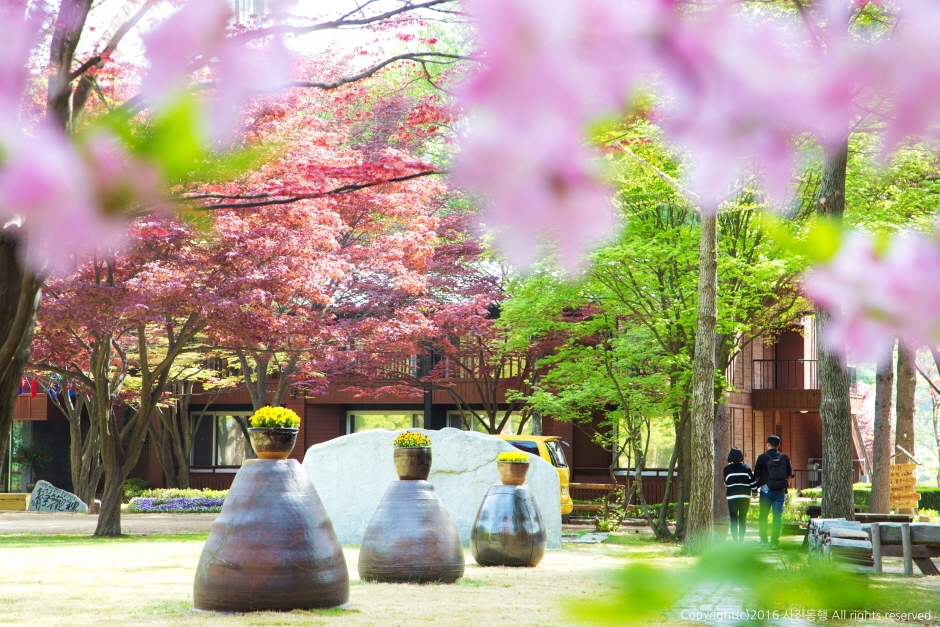
SPRING (March-May) The island if full bloom - cherry blossoms, soft light and a pastel wonderland. Temperature: 10-18 °C (50-64 °F) Light jacket recommended in the mornings.
Spring is one of the two peak seasons to visit Nami Island – and it is easy to understand why. As March gives way to April, the island’s famous tree-lined lanes burst into color. The cherry trees that line the central walking paths shed their petals in slow pink drifts, turning every walk into something that feels almost cinematic. The light in spring on Nami Island is soft and golden, the air is crisp, and the mood is unmistakably romantic.
Spring is also the season when Nami Island begins to feel alive again after winter’s quiet. Visitors start arriving from across Korea and the world, drawn by the cherry blossoms and the pleasant walking conditions. The island’s famous Metasequoia Lane – tall, straight conifers lining the main path – is particularly beautiful in spring when young green growth softens the otherwise dramatic tree corridor.
- Cherry blossom peak: typically early to mid-April — plan around this window if possible
- Metasequoia Lane glows with fresh green growth along the central walking path
- Weather is mild and ideal for full-day island exploration without heat or cold
- Crowds build through April — arrive early on weekdays for a quieter experience
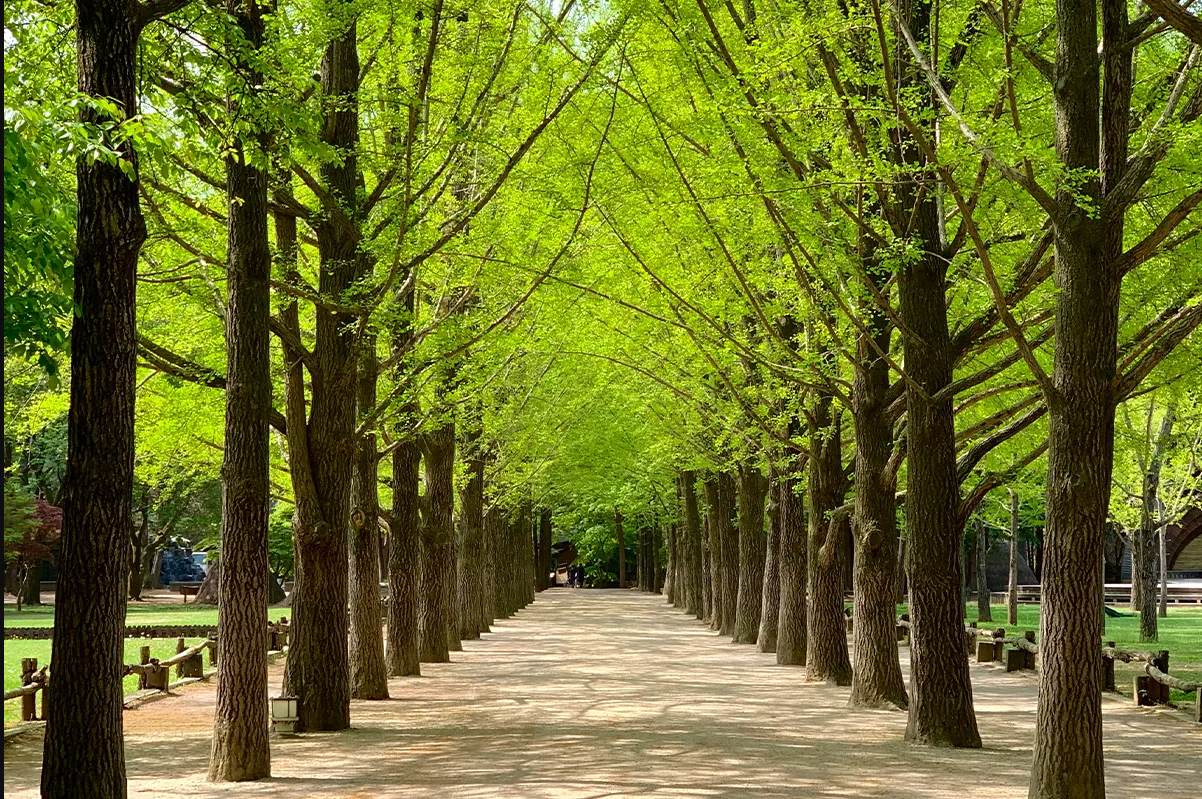
SUMMER (June-Aug) A lush green canopy overhead - the island at its most alive and verdant. Temperature: 25-33 °C (77-91 °F) Hot and humid, especially July - August.
Summer is Nami Island’s least visited season — and its most underrated. By June, the island is fully carpeted in deep, vivid green. The tall trees that line every path have grown into a complete canopy overhead, creating a cool, shaded corridor even on hot days. Walking through the Metasequoia Lane in summer feels like moving through a natural tunnel, with shafts of golden light filtering down through the leaves.
The island is quieter in summer than in spring or autumn, which means fewer crowds on the main paths, shorter ferry queues, and a more relaxed, contemplative pace. July brings Korea’s monsoon season, with occasional heavy rain — but Nami Island in the rain has its own particular beauty, with mist rising off the river and the trees heavy and dripping. Pack a light rain jacket and embrace it.
- The island is at its most lush and green — completely different from the bare winter look
- Fewer crowds than spring and autumn — more peaceful for photography and slow walks
- July monsoon rains create a misty, atmospheric island experience worth embracing
- Combined well with nearby Garden of Morning Calm, which is also spectacular in summer
“What is really nice about destinations with four seasons like Korea is that the charm changes as the season changes — from cherry blossoms in spring to fiery autumn foliage and a snowy winter wonderland. This reason alone makes Nami Island an all year-round destination.”
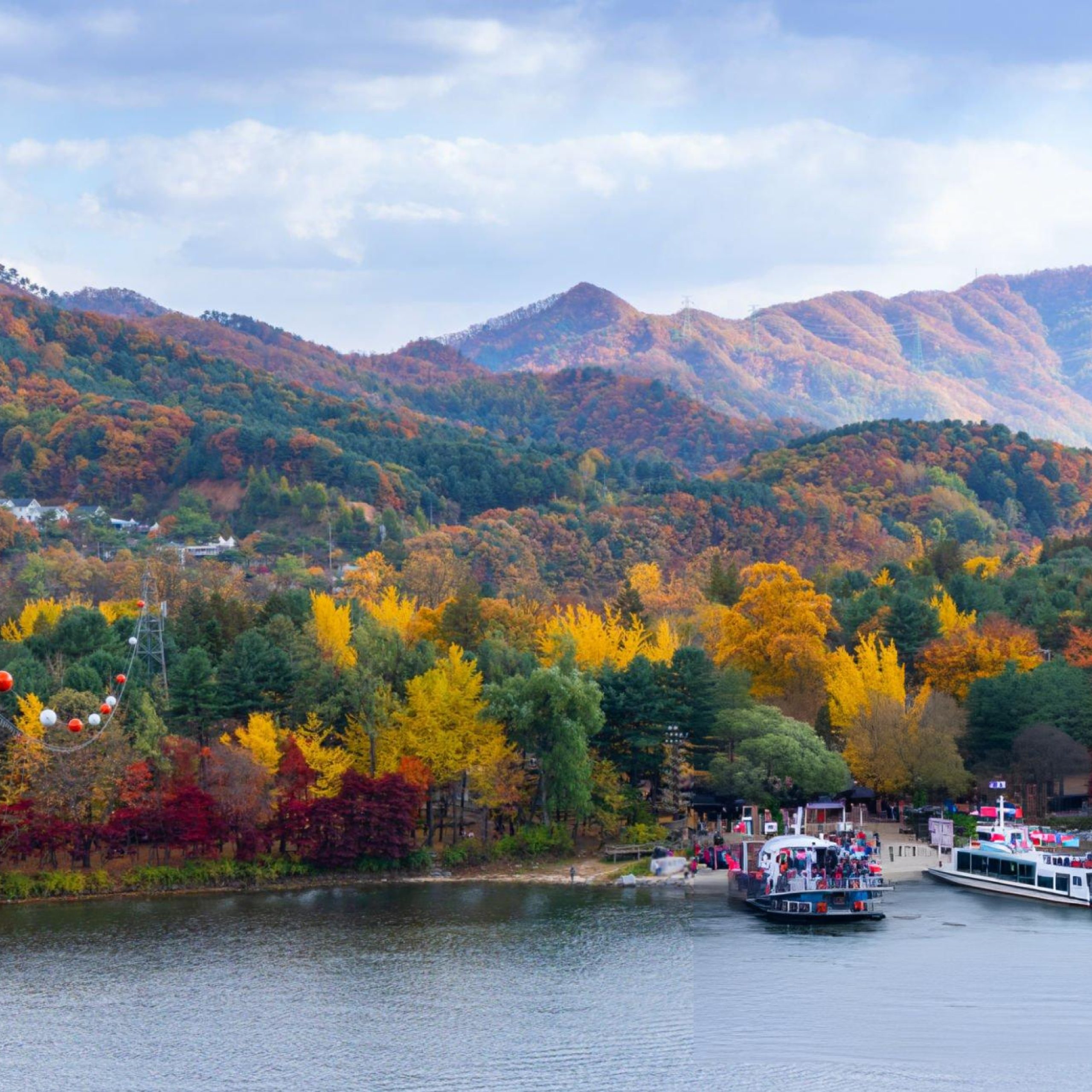
AUTUMN (Sept-Nov) The most popular season - a breathaking explosion of red, and gold. Temperature: 0-18 °C (32-64 °F) Layer up from October onward.
Autumn is perhaps the most popular season to visit Nami Island – and standing beneath the Metasequoia Lane as the leaves turn from green to blazing orange and gold, it is impossible to argue with the consensus. The island is covered in a stunning array of fall colors, with leaves turning brilliant shades of red, orange, and yellow. The Metasequoia Lane, Ginkgo Tree Lane, and Maple Lane are particularly famous for their breathtaking autumn scenery, making them perfect for leisurely strolls and photography.Early November is the peak of autumn color on Nami Island, when the leaves reach their most saturated and the island looks like a painting. The combination of cool, crisp air, the crunch of fallen leaves underfoot, and the warm colors overhead makes an autumn visit genuinely one of the most beautiful day-trip experiences available anywhere in South Korea.
- Peak foliage: early November — the island's most photographed and visited window
- Metasequoia Lane, Ginkgo Tree Lane, and Maple Lane all reach peak color simultaneously
- Cool, crisp weather makes for comfortable all-day walking without summer's heat
- Busiest season — book tickets and accommodation weeks ahead for October–November visits
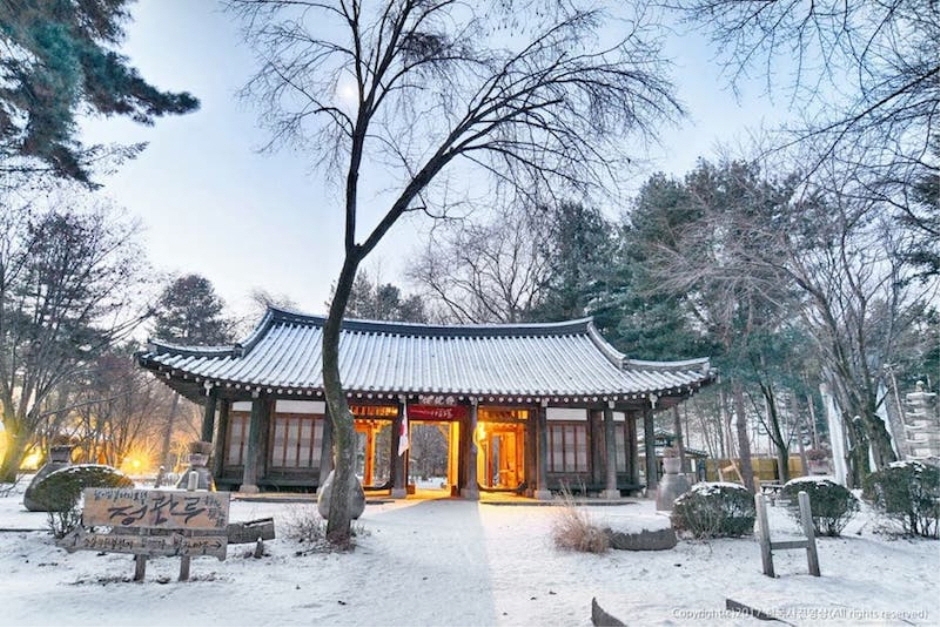
WINTER (Dec-Feb) A snow covered wonderland - serene, romantic, and unlikely any other season. Temperature: -10-5 °C (14-41 °F) Full winter layers essential.
Well known as the filming location of the beloved Korean drama Winter Sonata, Nami Island is famous for being a romantic winter destination. In winter, Nami Island transforms into a serene winter wonderland, with snow-covered tree-lined lanes and a hushed, peaceful atmosphere that feels a world away from Seoul’s energy. The bare trees of the Metasequoia Lane, dusted with snow and framed against a pale winter sky, are the image that made Nami Island internationally famous — and in person, the reality lives up entirely.
Winter is also Nami Island’s quietest season, which means the island is as close to empty as it ever gets. Walking the snow-covered paths with few other visitors around, the sound muffled by fresh snowfall and the river silver-grey in the cold light — it is one of the most peaceful and romantically atmospheric experiences available in all of Korea. February, around Valentine’s Day, is particularly popular with couples.
- Snow transforms the island into the exact Winter Sonata landscape that made it famous
- Quietest season — the most peaceful and uncrowded time to explore the island
- Valentine's Day in February draws romantic couples — book a guided tour for the best experience
- Temperatures can drop to -10°C — dress in full thermal layers, hat, gloves, and scarf


Comment (0)